Water Softeners · Las Vegas and Clark County
Water Softener Repair In Las Vegas
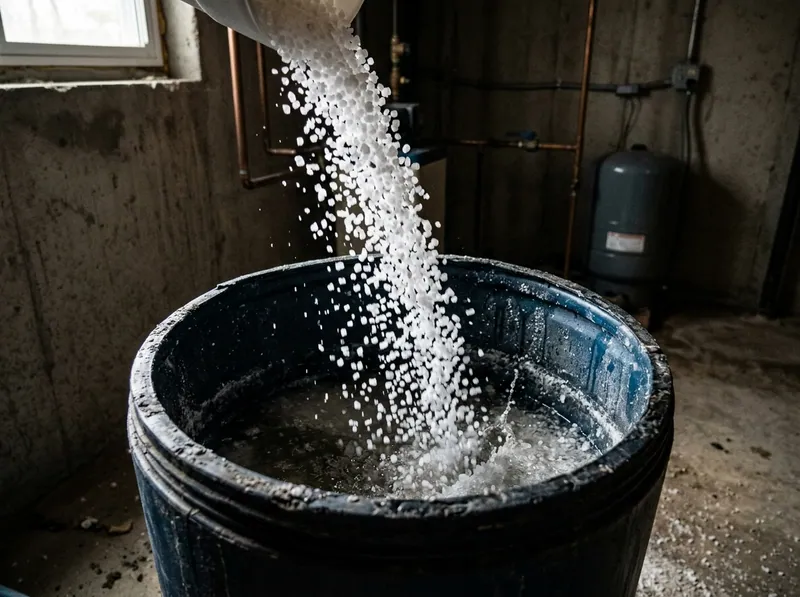
A softener that stopped softening is usually not finished. The most common cause is a salt bridge: a crust of hardened salt spanning the brine tank with empty space underneath, so the unit regenerates with plain water and nobody knows. That is a service call, not a replacement.
- Diagnosis before a price
- Nothing extra without your word
- 10 valley communities
The short answer
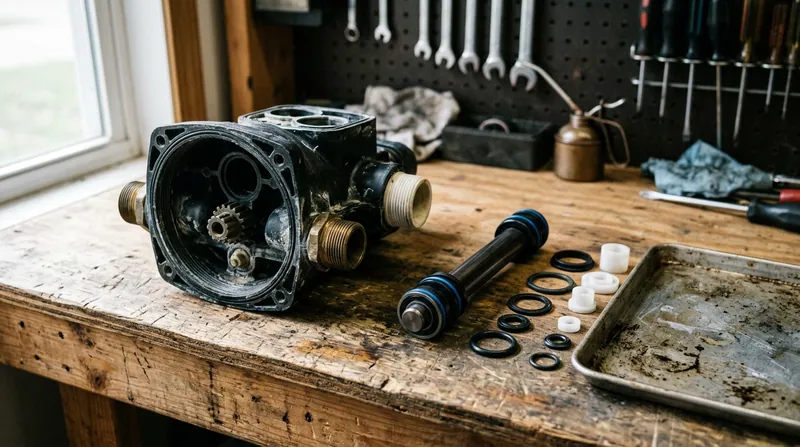
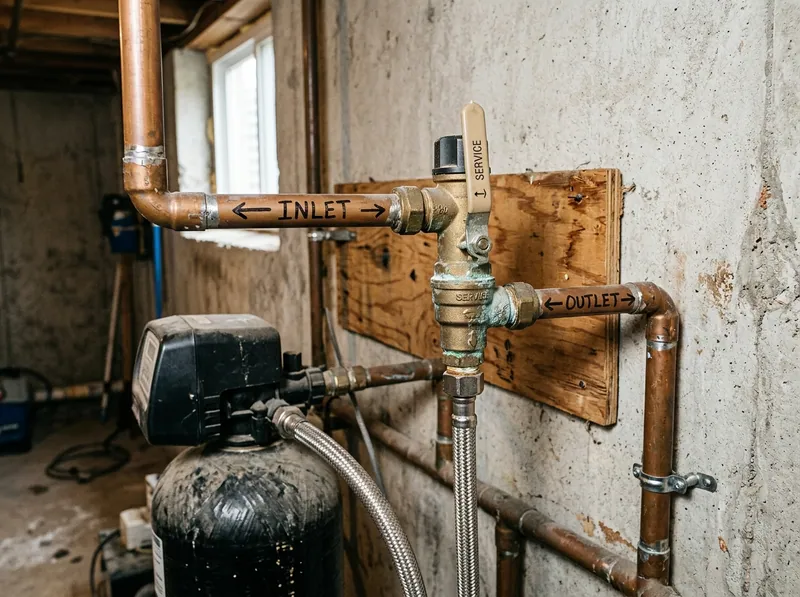
Water softener repair covers the parts that fail: the control valve head, the timer or control board, the brine draw system and the resin bed. Most complaints of my softener stopped working are a salt bridge in the brine tank or a valve that is not drawing brine, and both are repairable.
Is this you?
Signs You Need This
- Scale and spotting returning after months without it
- Soap not lathering the way it did
- The brine tank not using salt at the rate it used to
- The brine tank full of water and not draining
- An error code or a blank display on the control head
- The unit regenerating constantly, or never
- Salty tasting water after a regeneration
Talk to a plumber
Call For A Quote
Plumbing is quicker to diagnose out loud than in a form. Tell us what is happening and you will get a straight answer on what it usually means and what it costs to find out.
Call Now (725) 444-5979Have these ready
- What failed, or what you can see
- Anything you have already shut off
- Whether the water is clean or waste
- How many fixtures are affected
- The age of the house, if you know it
Office hours Monday to Friday, 8:00 to 17:00. Call to confirm availability outside them.
What is included
What This Service Covers
| Diagnosis | Whether the unit is failing to regenerate, failing to draw brine or failing to soften despite doing both. |
|---|---|
| Salt bridges and mushing | Breaking and clearing a bridged brine tank, which is the single most common cause. |
| Control valve service | Pistons, seals, spacers and injectors, the wear parts inside the head. |
| Control board and timer faults | Programming, power supply and board level diagnosis. |
| Brine system | Float assemblies, safety shutoffs, brine lines and the draw injector. |
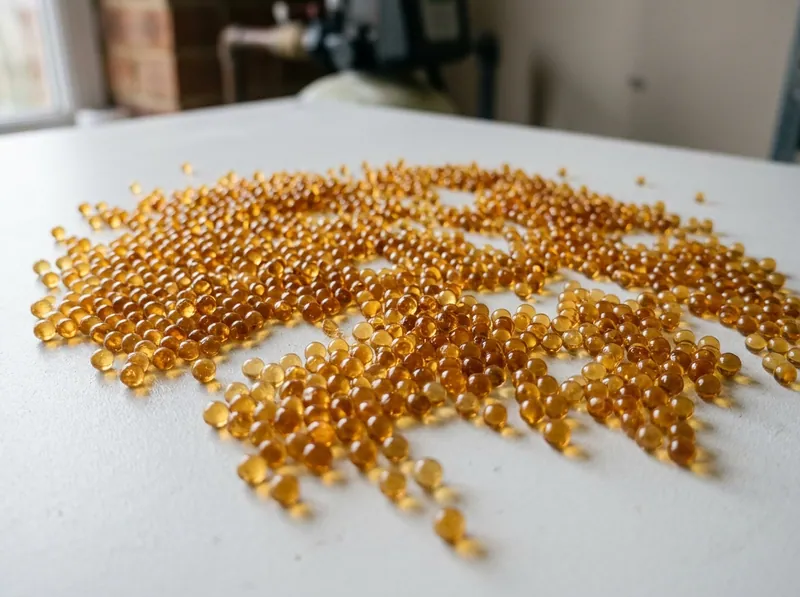
| Resin assessment | Whether the bed is fouled or spent, which is the one failure that can mean replacement. |
How it runs
How The Work Goes
- Check salt and look for a bridge firstIt is free, it is quick, and it is the answer more often than anything else.
- Test a manual regenerationWatching each stage shows exactly which one is failing.
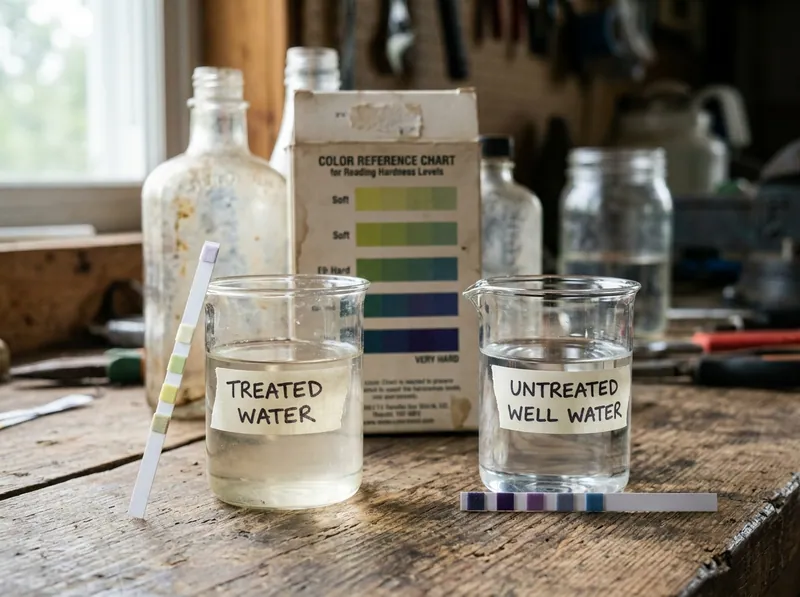
- Test water before and afterHardness testing proves whether the unit is actually softening rather than assuming.
- Repair, or state plainly when it is not worth itOn an old unit with a spent resin bed you get the replacement number alongside.
What it costs
What Moves The Price
We do not publish a price list, because a real number depends on what is actually wrong. What we can tell you is exactly what the quote will turn on.
- Which subsystem failed: control, brine or resin
- Whether parts for that make and model are still available
- Age of the unit, since a repair on a very old softener may not be the better value
- Whether the resin bed is fouled, which is the expensive finding
How the estimate works. The cause gets diagnosed first, then you get the price for the work before it starts. Where repair and replacement are both reasonable, you see both numbers rather than one.
The service call. The diagnostic and callout policy is quoted on the phone before anyone is dispatched, including whether it is credited toward the work. Ask when you call, and you will get a straight answer rather than a figure invented for a web page.
Straight answers
The Questions People Actually Ask
My softener is old. Is it worth repairing?
Frequently yes, because control valve parts are serviceable and the tanks outlast the head. The exception is a spent or fouled resin bed, and that gets stated plainly with both numbers.
It is full of salt but the water is hard again.
That is the classic salt bridge. The salt is crusted into an arch with a void beneath, so brine is never made. Breaking it up often restores the unit completely.
Do you repair brands you do not sell?
Yes, all makes and models. Bring the brand and model number when you call so the right parts come out.
My water tastes salty.
That usually means the unit is not rinsing properly after regeneration, often a drain restriction or an injector problem. It is a repair, and it is worth acting on rather than living with.
Where we work
Water Softener Repair Across The Valley
We cover this service across all the communities below. Each area page describes what we commonly find there.
Questions
Frequently Asked Questions
Why did my water softener stop working?
Most often a salt bridge in the brine tank, a control valve that is not drawing brine, or a programming fault after a power cut. All three are repairable.
What is a salt bridge?
A hardened crust of salt spanning the brine tank with an air gap underneath. The unit looks full of salt but cannot make brine, so it regenerates with water and the water goes hard again.
How do I know if the resin is spent?
By testing hardness after a confirmed correct regeneration. If the unit brines and rinses properly and the water is still hard, the bed is the suspect.
Can hard water damage the softener itself?
Iron and sediment foul resin over time. In the valley the practical effect is that a unit with no sediment pre filtration tends to need resin attention sooner.
Why is my brine tank full of water?
Usually a drain line restriction, an injector blockage or a failed brine valve. It is a repair rather than a sign the unit is finished.
How often should a softener be serviced?
Check salt monthly and have the unit serviced on the interval in your own manufacturer documentation. There is no universal figure that applies to every model.
Need Water Softener Repair In Las Vegas?
Call (725) 444-5979 for a straight answer, or send a quote request and we will come back to you.