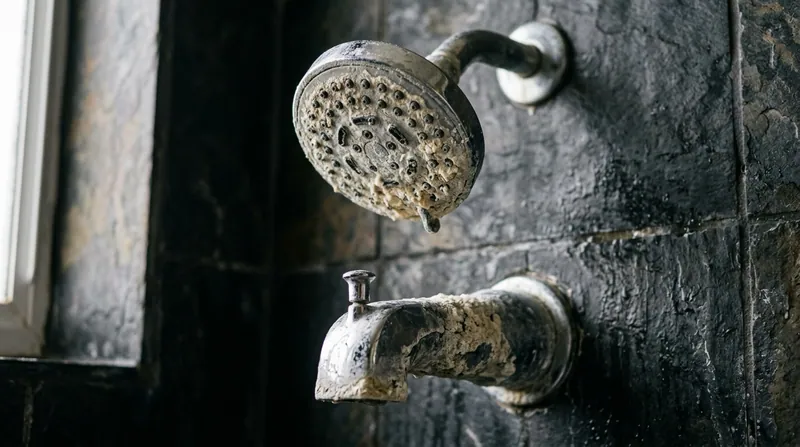
The number, and where it comes from
The Las Vegas Valley Water District publishes the figure directly: the hardness of valley water is 291 parts per million, or 17 grains per gallon, categorised as very hard. The minerals responsible are calcium and magnesium, and the district describes both as nontoxic.
The source is Colorado River water delivered through Lake Mead. River water picks up dissolved mineral from the rock it passes through, and the Colorado picks up a great deal of it. That is why the hardness figure here is so much higher than in cities supplied by surface water from granite catchments.
The district is also clear about what hardness is and is not. It describes the effects as aesthetic rather than health related: chalky build up on fixtures and spots on glassware. Nobody needs to treat their water in Las Vegas for safety reasons, and anyone selling treatment on a health argument is overstating it.
What 17 grains does to a house
Hardness becomes a problem when water is heated or when it evaporates. Both concentrate the dissolved mineral and deposit it as scale.
In a water heater, that means sediment settling in the bottom of the tank. On a gas unit it sits between the burner and the water, insulating the transfer surface and making the heater work harder for the same result. On an electric unit it builds around the lower element. Either way the usable capacity of the tank shrinks, which is why so many valley households report hot water running out sooner than it used to. The popping and rumbling people describe is water trapped under that sediment layer, boiling against the tank floor.
In fixtures, it lands on the sealing surfaces inside valve cartridges. A cartridge works by pressing a smooth surface against another smooth surface. Deposit mineral on either one and it stops sealing, which is the dripping faucet that starts a year or two earlier here than the manufacturer expected. The same deposits block aerators and shower heads, which is why one fixture can lose pressure while the rest of the house is fine.
In appliances, it accumulates in dishwashers and washing machines, and it is the reason dishes come out spotted no matter what goes in the rinse aid dispenser.
In tankless water heaters it is more consequential, because the heat exchanger is a narrow passage heated hard, which is exactly the condition that deposits scale fastest. A tankless unit in Las Vegas needs descaling on a schedule to keep performing as designed.
What the options actually do
A water softener removes calcium and magnesium through ion exchange, swapping them for sodium or potassium across a resin bed. It is the only common option that produces a measurably lower hardness reading at the tap, and it is what addresses scale.
A salt free conditioner works differently. It changes how the minerals crystallise so they are less inclined to adhere, but the minerals remain in the water and a hardness test still reads hard. That is not a criticism, it is a description: if the goal is a lower hardness number, a conditioner will not produce one, and it is worth knowing that before buying either.
Carbon filtration addresses chlorine taste and odour. It does nothing about hardness. This is the most common confusion we hear, and it costs people money in both directions: filters bought to stop scale, and softeners bought to fix a taste complaint.
Reverse osmosis treats the small volume of water you drink and cook with. It reduces a wide range of dissolved solids, and it is a point of use system rather than a whole house one.
The water district itself lists household softening among the options for hardness, does not endorse any brand or model, and notes that home treatment systems have to be maintained or they can reduce drinking water quality. That last point is worth taking seriously: a neglected filter is worse than no filter.
What treatment will not fix
Treatment prevents new scale. It does not remove what is already there. Deposits inside a water heater have to be flushed out, and mineral on a fixture has to be cleaned off. A softener installed today does not reverse ten years of accumulation.
Treatment also does not repair what scale has already worn out. A cartridge whose sealing surface is pitted stays worn after the water changes.
And treatment is not a plumbing repair. If the complaint is low pressure across the whole house, the cause is more likely a pressure reducing valve or corroded supply lines than hardness, and installing a softener will not change it.
The maintenance nobody mentions before the sale
A softener needs salt, and it needs someone to confirm occasionally that it is actually softening. It gives no warning when it stops. The most common failure is a salt bridge: a crust of hardened salt arching across the brine tank with a void underneath, so the unit regenerates with plain water while the tank still looks full.
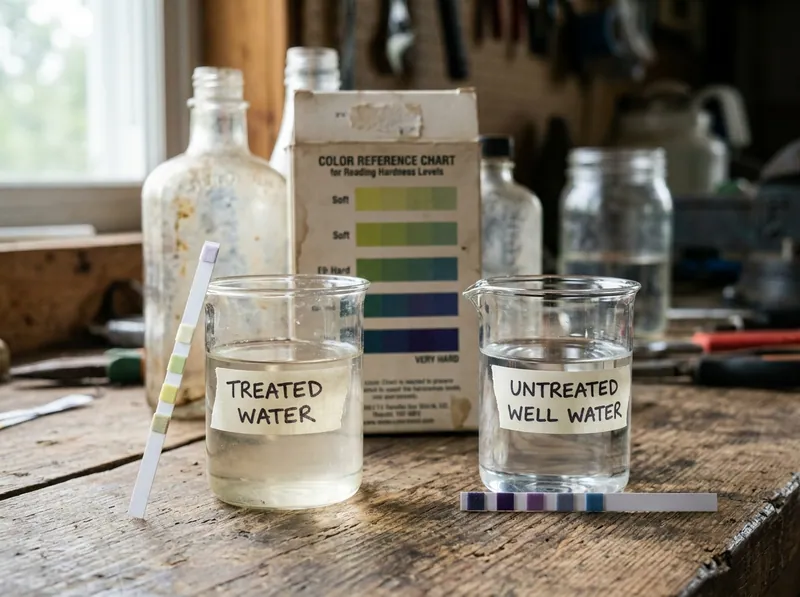
The check is simple. Put a hardness test strip under a treated tap. If it reads hard, the unit is not working, whatever the salt level suggests. That one test catches most softener failures months before the scale reappears on the shower door.
The rest of the routine is checking the salt monthly, keeping the brine tank clean, and having the control valve and resin condition looked at on the interval in your own unit documentation rather than on a general rule.