First, count the fixtures
Before anything else, work out how many fixtures are affected, because that single answer changes what the problem is.
One slow sink is a local clog in that fixture branch. It is a nuisance, it can wait for a scheduled visit, and it is usually cleared at the fixture.
Two or more fixtures backing up at the same time, especially the lowest ones in the house, means the main line. Water from an upstairs fixture appearing in a downstairs shower is the classic presentation. That is a different job with a different tool and a different urgency, and running more water makes it worse.
Gurgling is the in between signal. A fixture that gurgles when another one drains is telling you that air is being pulled through the trap because the line beyond is restricted, and it usually precedes a proper blockage.
Why clearing does not always fix it
A drain cable works by boring through an obstruction. On a foreign object or a hair mass, that removes the problem and the line is genuinely clear.
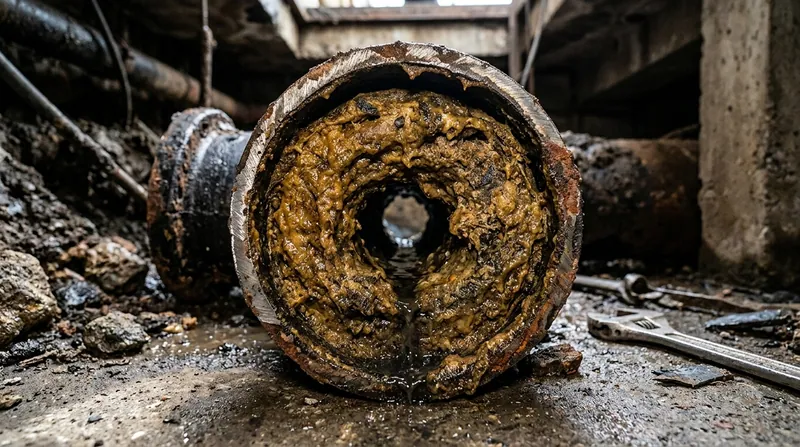
On a line that is coated rather than obstructed, it does something different. It punches a hole through the coating, water flows again, and everybody declares success. But the coating is still on the pipe wall, the effective diameter is still reduced, and it re closes over the following weeks.
That is the mechanism behind almost every complaint of my drain keeps blocking. The clearing worked. It just did not address what caused the blockage.
Hydro jetting is the answer to that specific situation, because it scours the full inside wall of the pipe with water rather than boring through the middle. That is the difference between a line that stays clear and a line that becomes a standing appointment.
The four usual causes
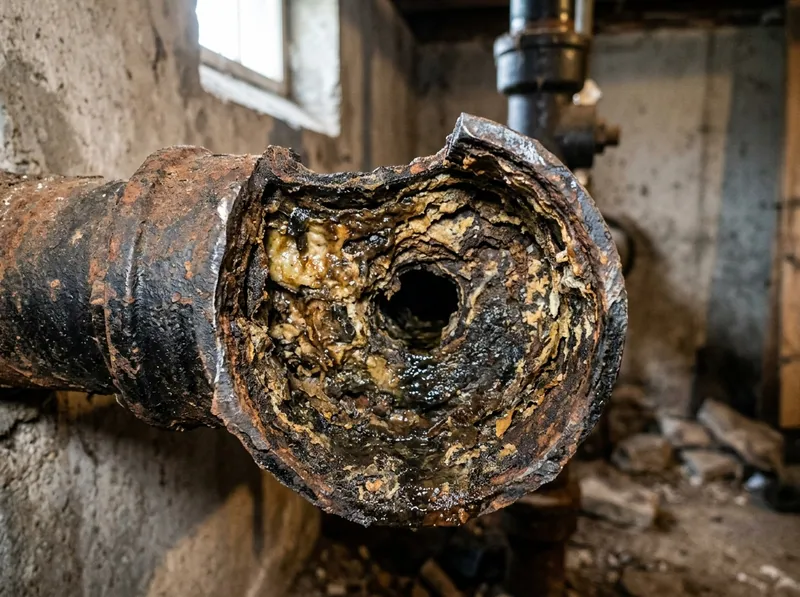
Grease is the leading cause in kitchen lines and by a very wide margin in commercial food service. It goes down warm and liquid, cools within a few feet, and adheres to the pipe wall. Everything that follows catches on it. Running hot water after it moves the problem further along the line rather than removing it.
Mineral scale matters more in Las Vegas than in most cities. Valley water is classed very hard at 291 parts per million, and scale accumulates inside drain lines as well as on fixtures, gradually narrowing the bore. In older cast iron it combines with corrosion to produce a rough interior that catches everything passing.
Tree roots enter through a joint or a crack, usually in an older sewer lateral, and grow into a mass inside the pipe. They are cut and flushed out, and they come back through the same opening unless that opening is repaired. Anyone promising a permanent fix by cutting alone is overselling it. Streets with mature landscaping are where this is worth suspecting.
A structural fault is the one that no amount of cleaning helps. A belly is a section that has sagged so waste pools instead of flowing, and it blocks on a schedule forever. An offset joint, a crack or a partial collapse does the same. These are the cases where repeated clearing is money spent on a symptom.
When a camera is worth it and when it is not
For a first time blockage that clears normally and does not come back, a camera inspection is not necessary and nobody should be pushing one.
For a line that has blocked more than once in a year, it is the cheapest thing you can do, because the alternative is paying to clear the same fault indefinitely without ever learning what it is.
A camera separates the four causes above, locates the fault to a point and a depth, and turns a guess into a decision. On a structural fault it is also what keeps any excavation small, because the digging happens where the fault is rather than where somebody thinks it might be.
What actually prevents it
Keep grease out of the kitchen drain. Not reduced, out. Let it cool in the pan and bin it. This is the single most effective change available to a household.
Use a strainer in showers and tubs. Hair and soap are the other common local clog and they are almost entirely preventable.
Be sceptical of drain chemicals. They can clear a light hair clog in a bathroom sink. They do not clear a grease line or a main, they sit in a blocked line as a hazard to whoever opens it next, and repeated use is hard on older pipe. If you have used any, say so when you call, because it changes how the line is opened safely.
If the line has a structural cause, prevention is not the conversation. Repair is.