Read the symptom first
No hot water at all and not enough hot water are different faults, and telling them apart before you call saves a visit.
No hot water at all points at something that stopped: an element, a thermostat, a high limit switch, a pilot or a gas control valve. The heater is not heating.
Hot water that starts hot and runs out sooner than it used to points at capacity rather than failure. In Las Vegas that is usually sediment taking up the space that hot water should occupy. The heater still works, there is just less room in it.
Water that swings between hot and cold, or is suddenly scalding, points at a thermostat or a mixing valve rather than the heating itself.
Water arriving rusty points at a spent anode rod and a tank interior that has started to corrode, which is worth acting on quickly because it is the one on this list that ends in a replacement.
The safe checks you can make yourself
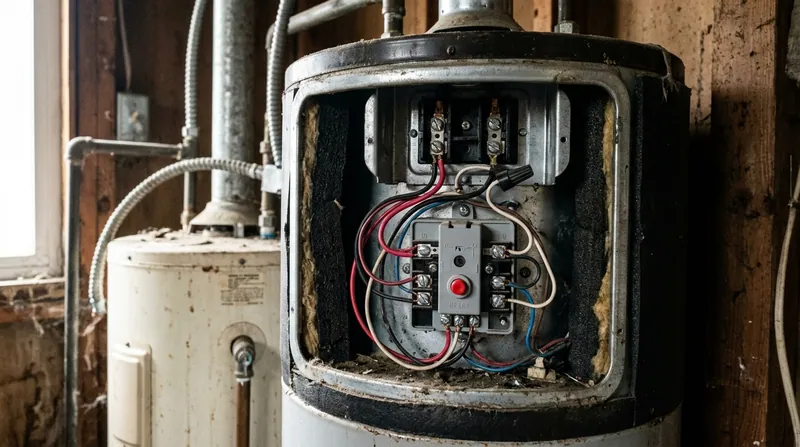
On an electric heater, check the breaker first. Then look for a red reset button behind the upper access panel cover, which is a high limit switch that trips on overheating. Pressing it is safe and it resolves a meaningful share of no hot water calls. If it trips again, stop, because something caused it and repeatedly resetting it does not address that.
On a gas heater, look at the status light or the pilot viewing window and note what you see. Many units display a flash code, and reading it from your own manufacturer documentation tells a plumber what is wrong before anyone arrives.
Check whether the problem is every hot tap or one fixture. One fixture pointing at cold while the rest are fine is a fixture problem, not a heater problem, and it is usually a cartridge or a scaled aerator.
Note the age of the unit if it is on the label. It changes the advice more than anything else you can tell someone on the phone.
That is the full list of what is worth doing yourself. Anything beyond it means gas, or mains electricity, or draining a pressurised tank, and none of those belongs in a guide.
Why Las Vegas heaters lose capacity
Sediment is the local failure mode, and the reason is published: valley water is classed very hard at 291 parts per million, or 17 grains per gallon.
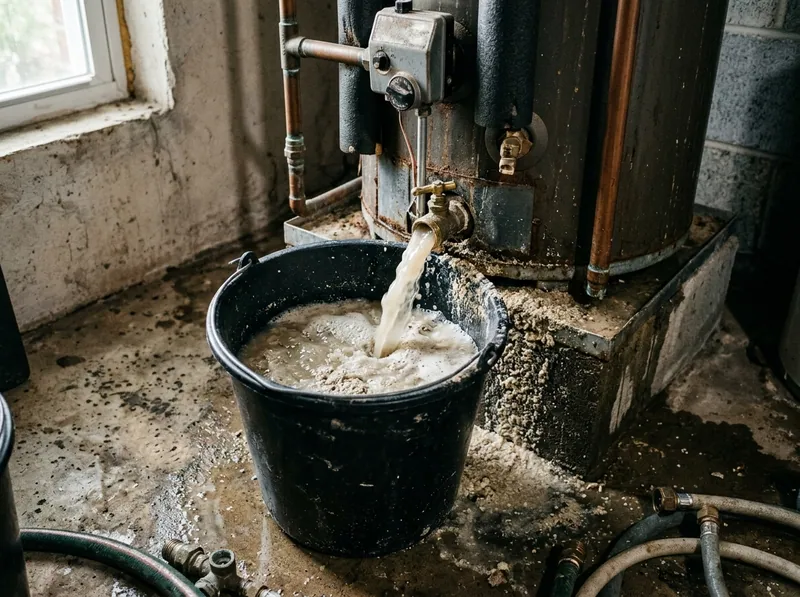
When that water is heated, dissolved calcium and magnesium come out of solution and settle in the bottom of the tank. The layer grows over years. On a gas heater it sits between the burner flame and the water, insulating the transfer surface so the unit runs longer for the same output. On an electric heater it builds around the lower element until the element is working inside a mineral shell.
Two things follow. The tank holds less usable hot water, so showers run cold sooner. And the trapped water beneath the sediment boils against the tank floor, which is the popping and rumbling people describe.
Flushing removes it. On a tank that is otherwise sound, that often recovers real capacity, and it is the single piece of maintenance that matters most for a water heater in this valley.
When the tank is actually finished
One symptom ends the conversation: water coming from the body of the tank rather than from a fitting, a valve or the relief line. A tank that has corroded through cannot be repaired, and the only question left is how much water it releases before it is replaced.
If you see that, close the cold supply valve at the top of the heater, switch a gas unit to pilot or an electric unit off at the breaker, and call. Those three actions are safe and they limit the damage.
Rusty hot water that returns after an anode replacement is the same story arriving earlier: the tank interior is corroding and the replacement conversation is a matter of timing rather than whether.
Everything else on this page is a repair, and a repair is usually a fraction of a replacement. Anyone quoting a new water heater without first establishing which of these symptoms you actually have is guessing with your money.